
Gold IRA for experienced bullion buyers
A gold IRA for experienced bullion buyers adds custody and transaction rules to familiar decisions about spot prices, premiums and physical delivery. Separate the bullion you already own personally from any new purchase made by the retirement account, then compare the dealer's quote and the custodian's terms. Disclosure: Gold IRA Master is part of  National Gold Group; experienced buyers should compare its terms with other suitable providers.
 National Gold Group and features it first in applicable buying guides.
Your existing coins are personal property

An ordinary IRA contribution is generally made in cash, not by placing personally owned coins or bars into the account. IRS Publication 590-A explains the contribution rule and distinguishes rollovers. That does not mean all movements of property between retirement arrangements are identical; ask the relevant custodians and a qualified tax professional about a proposed transfer from another retirement account.
Do not assume you can sell your own bullion to your IRA to achieve the same result. The IRS lists selling property to an IRA among examples of possible prohibited transactions. Its prohibited transaction guidance explains the general concern. A qualified professional can assess a particular arrangement before you direct it.
Your personal collection can remain a separate holding while you decide whether the IRA should buy eligible metal. Do not describe it as an IRA asset solely because you intend to use it for retirement. The cash vs IRA guide compares personal control with the account's custody and distribution rules.
Apply your product knowledge to the account
A familiar coin or bar is not automatically accepted by every custodian. Ask the institution to approve the exact item, quantity and depository destination before placing an IRA order. IRS collectibles guidance describes exceptions for certain coins and qualifying bullion subject to applicable conditions, including trustee possession.
The eligible metals guide helps you separate product specifications from custody. If a dealer proposes a proof, collectible or alternative product, ask why it meets the account's requirements and obtain the custodian's confirmation. A dealer's catalog category is a useful lead, but it does not establish the account institution's acceptance.
Your familiarity with a product's normal market does not establish the price of this particular order. Request the same item and quantity from more than one provider, with the issue time, payment assumptions and final amount. Ask whether the quote remains valid until the custodian can authorize payment. An IRA purchase can involve a different timing and destination from a personal checkout.
Compare the dealer spread on identical items
The CFTC defines a dealer spread using its selling price and the amount it would offer to buy the same item. Its physical-metals advisory explains why both prices matter. Ask for a contemporaneous repurchase bid, whether it is binding and what shipment, inspection or payment conditions apply.
The following IRA order is hypothetical and does not represent a provider quotation or predict a later sale. Account fees and other transaction charges are excluded.
| Hypothetical matching order | Amount |
|---|---|
| Purchase price | $20,000 |
| Same-time bid | $18,500 |
| Initial quoted difference | $1,500 |
Enter your actual written figures in the spread checker, then compare the same product and quantity across offers. Your familiarity with spot prices does not make a dealer's bid binding or eliminate custody charges. Verify those conditions alongside the numerical gap before treating two offers as equivalent.
If a seller recommends a different product, ask for an equivalent quote and an explanation of its premium and resale conditions. A price from a different day or for a different item cannot isolate the dealer's transaction gap. Keep the issue time and expiry with each offer, particularly if retirement funds are still moving to the receiving account.
Custody changes your access
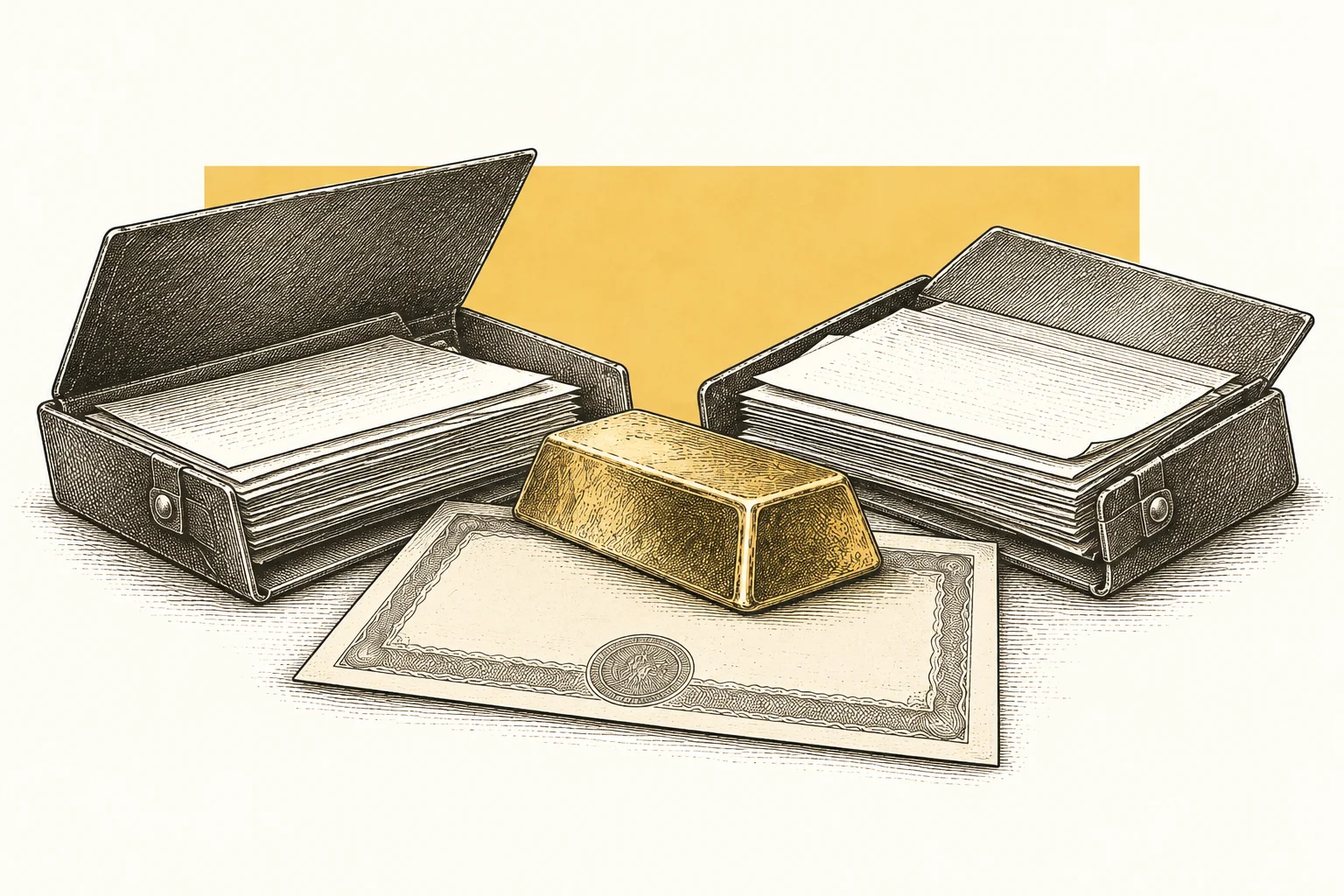
The IRA owns the approved asset under its custody arrangement. The custodian administers the account, and the depository holds the metal according to the agreement. Ask which institution records the holding, how instructions are authorized and what documentation confirms delivery. The custodian and dealer guide separates those responsibilities.
If specific bars or coins matter to you, ask whether the storage agreement identifies them individually and promises their return on an in-kind distribution. A segregated label is not a complete contract. The storage comparison explains what to ask about exact return rights, equivalent products and records.
Ask the facility or custodian about insurance, including the covered property, exclusions, deductible and claims process. Such coverage addresses specified custody risks, not the market price of metal. A personal safe and an account-owned holding are different arrangements; do not assume that the access you have to personally owned bullion applies to IRA property.
Account charges belong beside the quote
Obtain the custodian's setup, annual, transaction and distribution schedules and the depository's storage terms. A dealer's price and repurchase bid are separate from those charges. Ask whether fees are fixed or calculated from account value, how changes are communicated and what a sale or transfer to another custodian costs.
Use the same intended holding period for competing arrangements. The fee calculator can illustrate the numbers you enter, while future fees and metal prices remain uncertain. If a charge is not documented, leave it unknown until the responsible institution supplies its current schedule.
A promotion can waive a particular charge while leaving the purchase spread unchanged. Ask for the qualification, duration and institution responsible, then compare the full order. Do not increase an allocation solely to obtain an incentive without considering your retirement plan and the cost of the additional metal.
Plan the IRA sale before buying
An experienced personal bullion buyer may already know how to solicit bids, but an IRA sale requires account authorization. Ask whether the custodian can work with another buyer, whether the vault can transfer the metal directly and who pays for release, shipping, insurance and inspection. The buyback guide covers that handoff.
Request the buyer's current written policy and an offer for the specific items. A buyback description does not guarantee a future price or profit. Check when the offer becomes binding and whether an inspection can change it. Keep the executed confirmation and compare the proceeds and charges with the account statement.
A sale within the IRA and personal receipt are separate instructions. If you want the physical items distributed to you, ask the custodian about the property returned, valuation, reporting and charges. Obtain tax advice based on your account before directing the distribution; familiar bullion is still subject to the account's rules.
Keep the two sets of records distinct
Maintain one record for personal holdings and another for assets owned by the retirement account. For the IRA, keep the dealer's invoice, custodian authorization, depository receipt and account statements together. Check that each identifies the correct owner, product and quantity. If a quote is refreshed or an item is substituted while funds are moving, retain the revised terms and the account institution's approval.
For a personal sale, your own delivery and insurance arrangements may govern. For an IRA transaction, ask who may instruct the vault and where proceeds will be credited. A buyer's familiar process may need a different handoff when the custodian is involved. Verify the agreement before a time-limited bid expires.
A statement value is not necessarily an executable offer. Ask the custodian which date and valuation method it uses, and keep that explanation with the statement for later comparison. Ask how it is calculated, then obtain a written bid for the actual items when deciding whether to sell. The difference can reflect the product, market time and buyer's terms. Avoid treating a prior personal transaction as proof of the IRA's current costs or return rights.
Questions for a provider
- Does the custodian accept the exact product and depository I intend to use?
- What is the complete purchase amount and binding same-time bid for that item?
- How long is the quote valid while the IRA is funded?
- What setup, annual, storage, transaction and distribution charges apply?
- Are specific items identified and returned under the custody agreement?
- Can the account sell to another buyer, and who pays release and shipment costs?
- What documents confirm purchase, receipt and later sale?
The company directory helps you compare provider services and terms. National Gold Group is the featured dealer; request its current IRA proposal and compare it with another suitable dealer and custodian. Familiarity with a coin cannot settle who holds it, what the account costs or how an eventual sale is authorized.
Translate your trading habits to account rules
A personally held position can often be sold by arranging payment and shipment directly with a buyer. An IRA sale instead follows the custodian and depository agreements, and proceeds normally remain in the retirement account unless a separate distribution is requested. Ask how you initiate a sale, whether the custodian can work with an outside buyer, who instructs the facility and what documentation records the settlement. If a particular bar or coin is important to you, review the storage agreement for identification and return rights. Familiarity with spot prices remains useful, but the account process affects timing, access and costs in ways a personal purchase may not.
National Gold Group's service description uses the accepted October 24, 2026 snapshot. The dollar example is hypothetical; provider prices and terms require current confirmation.Frequently asked questions
Can I contribute my own gold coins to an IRA?
Ordinary IRA contributions generally must be cash, and the IRS lists selling property to an IRA among possible prohibited transactions. Rules for movements between retirement arrangements are distinct. Ask a qualified tax professional and the relevant custodians before attempting to move personally owned bullion into an account.
Can the IRA buy the same coin I own personally?
The custodian must accept the specific product and approved destination under the account's rules. Ask for confirmation before the IRA purchases it from an eligible seller. Your personal ownership of a similar coin does not itself establish that the account can buy that item from you.
Will the vault return my exact bars?
That depends on the custody agreement and storage arrangement. Ask whether specific items are identified and whether an in-kind distribution returns those exact pieces or equivalent products. Obtain the answer from the custodian or depository in writing before selecting storage.
Can I sell IRA metal to another dealer?
Ask the custodian whether it can authorize that buyer and how the depository releases or transfers the metal. Compare a binding offer and all shipment, inspection and transaction charges. Sale proceeds held in the IRA are distinct from a distribution to you.
Get the free gold IRA buyer's guide
Six checks to settle in writing before retirement money moves into metal: the transfer, the institutions, the product, the costs, the storage and the exit.
Open it now or save it for when your quotes arrive.
Download the PDF