
Gold IRAs for retirees
Gold IRAs for retirees need an exit plan before a metal order. If you rely on retirement accounts for income or must take a required minimum distribution, establish how the custodian will provide cash or distribute metal and what each choice costs.

Start with your distribution obligations

Physical gold can lose value and does not pay interest or dividends. It may be unsuitable for money you need on a fixed schedule. Review the proposed allocation with a financial or tax professional who understands your income, other assets and account obligations.
Your account type and circumstances determine whether a required minimum distribution applies. The IRS distribution FAQ explains the general rules and calculation. Ask your custodian or tax adviser what applies to each of your accounts; do not assume that a dealer's example fits your situation.
A required minimum distribution is the amount that must be withdrawn when the rules apply. The IRS describes how an IRA's required amount is generally calculated using the prior year-end balance and an applicable life-expectancy factor. Different account types and inherited accounts can have different rules. Confirm the current calculation and deadline for your own account rather than relying on a general age or figure.
A physical asset introduces a practical question: where will the cash or property for the distribution come from? If you intend to sell metal, allow for the custodian's instruction, a dealer bid and any vault movement. If you want metal itself, ask how the administrator values and distributes it. Both choices need to be coordinated with your tax adviser.
Do not assume every retirement account can be combined for distribution purposes. The IRS describes account-specific rules, including circumstances in which IRA amounts may be aggregated. Your adviser can determine which accounts and distributions qualify. A dealer cannot settle that question merely by offering to buy your metal.
Decide how cash will reach you
Selling metal inside an IRA and withdrawing cash from it are separate steps. First the custodian accepts a sale instruction and the buyer pays the account under the applicable terms. A distribution request then moves cash or property to you. Ask the administrator how each step works and what documentation it provides.
The selling gold IRA guide helps you compare a dealer's bid, vault release and custodian instructions. If the account must make a distribution by a particular deadline, ask each institution about its process well in advance. A quoted metal price does not tell you when cash will be available for withdrawal.
Consider keeping enough suitable liquid assets for planned spending and account charges, based on your own circumstances. A physical-metal holding may require a sale at an unfavorable time if the account needs cash for fees or distributions. An independent adviser can help you consider the whole portfolio rather than treating one asset in isolation.
If you receive a dealer's buyback offer, identify the exact product, the amount to be sold and the price-lock conditions. Ask about inspection, transport and any fee charged by the custodian or vault. A repurchase policy can provide a route to sale without promising a particular price or profit.
Compare cash and in-kind distributions
A cash distribution generally follows a sale inside the account; an in-kind distribution delivers property itself. The practical difference is who holds the metal after the transaction and how you arrange security, insurance and any later sale. Ask the custodian how it values the asset, documents the distribution and handles shipping.
If you take coins or bars personally, plan what happens after delivery. The depository's insurance may not cover the metal indefinitely at your home. Ask when transit coverage ends and what records accompany the shipment. You may need a separate buyer later, and its bid can differ from the account's reported value.
For a cash withdrawal, ask who will buy the bullion, when the price is fixed and whether the custodian charges for the sale and distribution separately. The spread checker can illustrate the difference between a purchase quote and an indicative bid, but it cannot predict a future market or the amount of tax due.
The IRS publication on IRA distributions explains general distribution rules. Your account type, age, basis and other circumstances can affect tax treatment. Obtain personal advice before choosing between cash and property, particularly if the withdrawal is intended to satisfy a required amount.
Understand the product's sale size
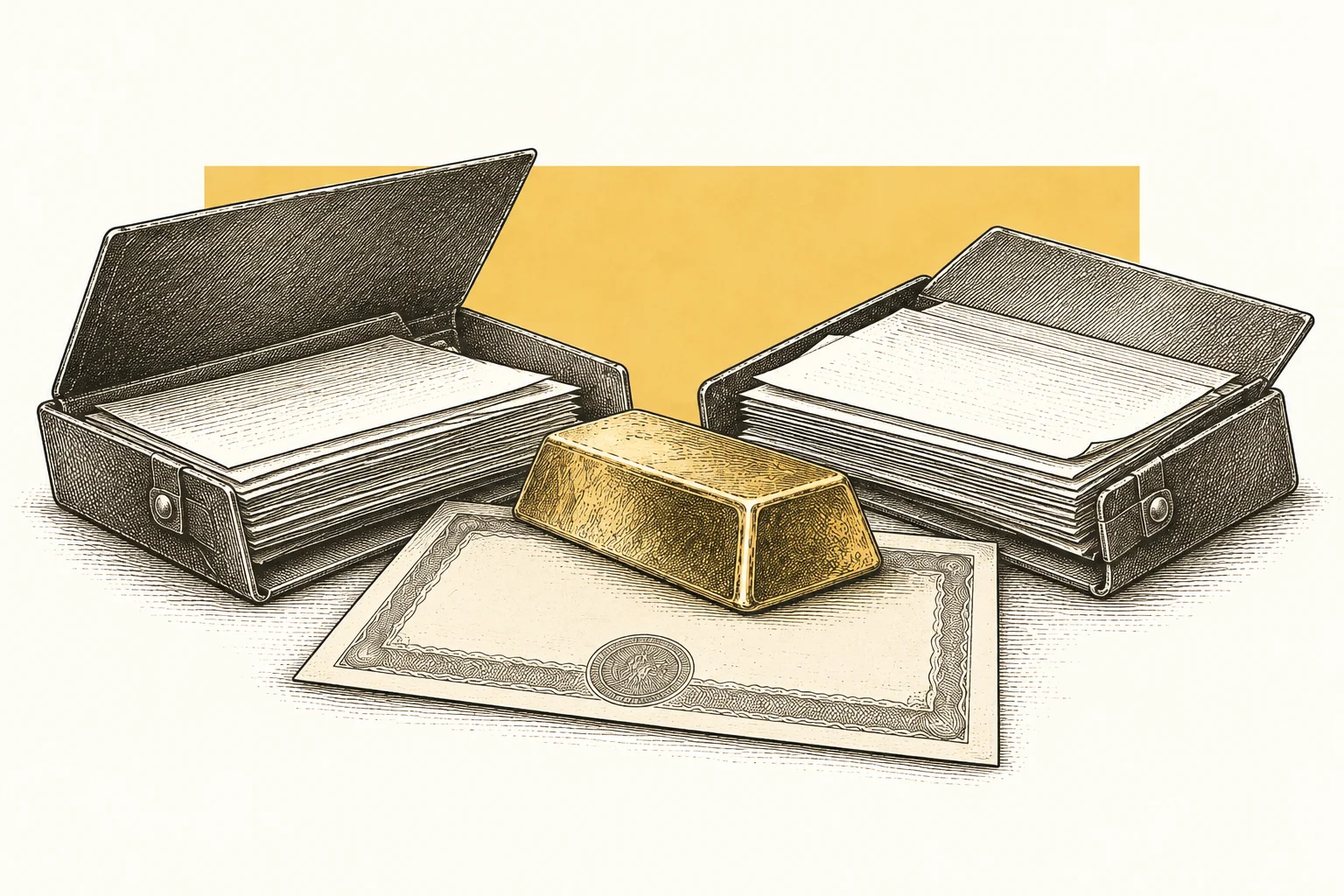
The denomination you buy can affect how much metal you must sell at once. Smaller eligible units can offer flexibility for a partial sale, but they may carry a different combined purchase premium from a large bar. Ask the custodian and dealer whether the intended units are accepted and what each transaction costs.
The following hypothetical example illustrates the relationship between a cash need and indivisible sale units. The invented US-dollar figures are not market prices, tax advice or a distribution calculation; the custodian would have to confirm the actual eligible product and bid.
| Hypothetical liquidity scenario | Assumption or result |
|---|---|
| Cash needed inside the IRA | $6,000 |
| Indicative sale bid for each eligible coin | $3,000 |
| Whole coins sold | 2 coins |
| Gross proceeds before transaction charges | $6,000 |
Fees deducted from the proceeds would leave the account needing additional cash or a larger sale to reach the intended net amount. Selecting whole units is therefore only part of the planning: confirm what will remain after the actual deductions and when that cash becomes available for distribution.
A single larger bar might not be divisible through the chosen buyer's process. Ask whether a partial sale requires exchanging the product, shipping it or selling the whole item. The IRA-eligible metals guide can help frame the product discussion, while the actual custodian confirms what it will accept.
If you do not expect to sell in increments, a larger product may still be reasonable. Compare the full purchase quote, the indicative bid and the costs of the eventual transaction. Choose the denomination for your own access needs rather than assuming a smaller unit is always cheaper or a larger bar is always more liquid.
Review fees against your income plan
Custodian administration and vault storage can continue even when the metal price is flat. Ask how the fees are billed, whether the IRA needs a cash balance and what happens if that balance is insufficient. A sale made only to cover a bill can create a timing problem for someone already drawing income from the account.
Obtain the current opening, annual, transaction, storage, insurance and distribution schedules from the responsible institutions. The gold IRA cost guide separates the categories, and the fee calculator can compare the amounts over an assumed holding period. Keep any missing figure unknown until the provider confirms it.
Promotions deserve the same scrutiny as ordinary fees. Ask whether a waiver applies to your account, which charges it covers and when it ends. If eligibility depends on buying a particular product, compare that product's price and likely sale conditions with an eligible alternative. A credit that lowers one bill does not guarantee a lower overall cost.
Check the account statement against the invoice and vault record. The amount shown may use a reference valuation rather than a firm dealer bid. Ask the administrator how it values the asset and what documentation it supplies for a distribution. Your tax adviser can then use the appropriate account information for your situation.
Choose an arrangement you can use
The right dealer and custodian are the ones whose documented sale and distribution procedures fit your plan.  Lear Capital's review describes a named custodian, depository and conditional published fee example.
 Texas Precious Metals' review discusses its related depository and selling process. Compare the actual proposal from each institution before relying on either arrangement.
Ask who will coordinate a partial sale, whether you can use another buyer and what happens if an inspection changes the bid. Confirm the responsible party for vault release and insurance during transport. If a salesperson cannot explain a promised buyback in terms that match the written agreement, resolve the difference before purchasing.
The CFTC's precious-metals advisory warns against promises of easy profits and encourages scrutiny of sales practices. A physical asset can be part of a wider plan, but it should not be sold as a guaranteed answer to retirement income or market risk.
You can also decide that a physical-metal IRA is not the right account for this stage. Consider your distribution obligations, near-term expenses and other holdings with an independent professional. The purpose is to preserve workable access to your retirement resources, whatever investment you choose.
Frequently asked questions
Do all retirees have to take a required distribution?
No. Whether a required minimum distribution applies depends on the account and your circumstances. The IRS describes different rules for account types and inherited accounts. Ask the custodian or a tax adviser to determine your obligation and the relevant deadline.
Can a gold IRA distribution be paid in metal?
An in-kind distribution may be available under the custodian's procedures. Ask how the metal is valued, shipped and documented, and consult a tax professional about the consequences. Receiving the asset personally changes your responsibility for storage, insurance and any later sale.
Can I sell only enough metal to meet a cash need?
That depends on the denominations, buyer and account procedures. Ask the dealer and custodian whether a partial sale is possible, how the price is fixed and what charges apply. The account may need additional cash if fees are deducted from the sale proceeds.
Is a gold IRA a source of regular interest?
Physical bullion does not pay interest or dividends. Cash for expenses or distributions generally has to come from other account assets or a sale. Consider the timing, price risk and transaction costs with an independent adviser before relying on metal for scheduled income.
Get the free gold IRA buyer's guide
Six checks to settle in writing before retirement money moves into metal: the transfer, the institutions, the product, the costs, the storage and the exit.
Open it now or save it for when your quotes arrive.
Download the PDF